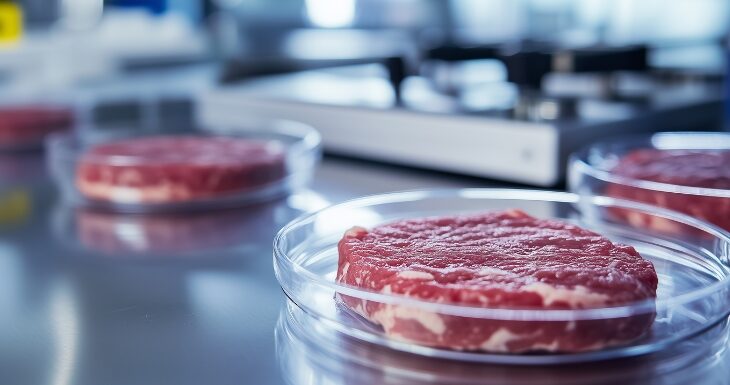
There has been a huge change across the world’s food industry as more people want healthy, sustainable, and ethically sourced protein sources. An incredible development in this transformation has been cultivated meat. Cultivated meat produces meat directly from animal cells instead of farming traditional livestock using technology to do so. Because of the increase in environmental and food security issues, investors, manufacturers, and consumers have increased their interest in the Cultured Meat Market. The rise of cell-to-plate (cultivated) meats has opened up completely new areas in the food industry.
Traditional meat production is being completely re-imagined through advances in biotechnology/cellular agriculture and new food innovations. As such, we expect to see continued rapid growth of the cultivated meat industry over the next few years, resulting in a new era of sustainable food systems around the globe.
Understanding Cultivated Meat
Cultivated/cultured meat (a.k.a. lab-grown or cell-based meat) is produced by cultivating (growing) animal cells in a laboratory (in vitro) rather than using conventional, animal-based methods that require the death of the animal. Cultured meat offers the same flavour, texture, and nutritional characteristics as conventional meat but does so without the need to raise an animal for slaughter.
The developed technology in growing cell-based animal products is making the Cultivated Meat Industry among the fastest-growing of all alternative protein industries. Companies across the globe are investing substantially into research & development to not only enhance product/process efficiencies but also the cost to produce cultivated products.
Why Cultivated Meat Is Gaining Momentum
Growing interest in Sustainable Proteins
As consumers become more educated about how traditional meat production negatively impacts our environment, there will be greater demand for Questions in Alternative Proteins, including both cultivated and plant-based meat alternatives.
Awareness has grown regarding the impact of greenhouse gases, land degradation, and water scarcity on our planet, leading to manufacturers exploring sustainable alternatives to full meat products. Therefore, the Cultivated Meat Market is growing all over the world.
Increasing Investments in Food Technology
Many major companies and venture capitalists are allocating significant amounts (billions) of money to food innovations. Improvements in Food Technology (e.g., technology, tissue engineering, and cellular agriculture) have allowed for the improved commercial viability of cultivated meats.
Some of these innovators and the acceleration of market development of cultivated meat include Upside Foods, Mosa Meat, GOOD Meat, Aleph Farms, which has been supported by various investments, that will help build long-term Growth of the Cultivated Meat Market.
Growing Focus on Food Security
Because of estimates that the world population will grow beyond 9 billion people within the next 30 years, determining how to feed everyone in the future is becoming a large issue. Cultured meat presents the ability to produce a scalable solution that uses much fewer resources and can therefore help to meet future protein requirement are, but does not put too much additional stress on our global ecosystem.
Key Benefits of Cultivated Meat
Environmental Sustainability
Conventional livestock production has been shown to produce CO2 emissions and contribute to deforestation, while Sustainable Cultivated Meat consumes less natural resources and has a lower impact on the environment.
With increased attention being paid by both governments and consumers towards sustainability, the Cultivated Meat Market (Mercado de Carne Cultivada) will likely benefit from favourable government policies and the growing acceptance of cultivated meat among consumers.
Enhanced Animal Welfare
The issue of ethically produced animal proteins is addressed through the use of cultivated meat because it is created from a small sample of an animal’s cells. Therefore, no animals are harmed in the production of cultivated meat.
Improved Food Safety
Bacterial contamination and disease transfer occur in the production of conventional meats. In contrast, the production of cultivated meat occurs under controlled manufacturing conditions to reduce these risks and improve the overall level of food safety.
Resource Efficiency
Relative to conventional animal agriculture, the production of cultivated meat requires less land and water. These benefits are contributing to the growth of the Cultivated Meat Industry (Industria de Carne Cultivada).
Challenges Facing the Cultivated Meat Industry
While it seems promising that cultured meat may be on the table someday in the future, there are quite a lot of obstacles to overcome to market cultured meat on a commercial scale. Cultivated meat remains expensive to produce, but not nearly as much as it was a decade ago, and businesses have begun to scale production to reduce expenses.
Regulatory approval is still a challenge as countries have different regulations surrounding cultivated meat products. Singapore is currently the only country to approve cultivated meat products, but there are efforts in the United States to create a regulatory framework that supports the commercialization of cultivated meat products.
Consumer acceptance of cultivated meats is limited due to consumer concerns about perceived safety, taste, and production methods; therefore, increasing education and awareness will be essential to building a consumer base for cultivated products.
Technological Innovations Driving Growth
Brought to you by: Emerging technological developments in biotechnology have been helping to revitalize the cultivated meat market. From AI, which many have begun using in efforts to boost product development, and machine learning helping to create more efficient production, and advancements in new bioreactors enabling large-scale cultivations, the future is bright in the Cultivated Meat Industry.
Emerging Trends in the Cultivated Meat Market (Mercado de Carne Cultivada)
Several trends are shaping the future of cultivated meat.
-
Rising investments in cellular agriculture.
-
Strategic partnerships among food technology companies.
-
Increasing consumer demand for sustainable food products.
-
Expansion of alternative protein portfolios.
-
Growing government support and regulatory approvals.
-
Continuous advancements in biotechnology and food innovation.
These developments are improving the Outlook for the Cultivated Meat Market (perspectivas del mercado de carne cultivada) and creating new opportunities for market participants.
Impact on the Global Food Industry
A few things cultivated meat will do for traditional systems… The cultivation of meat will provide a paradigm shift to conventional systems. As the pace of consumption patterns is altering, many food manufacturers are actively adding alternative proteins to the list of their offerings. Restaurant chains, retailers, and many other dining outlets are also identifying innovative methods to put the manufactured meat dishes into popular consumption.
As costs start to decrease to manageable levels, likely that conventional food systems might well incorporate some part of the production chain from conventional sources into meat culture to create a part of the traditional meat ecosystem.
Size of the Cultivated Meat Market: It’s all set to boost at exponential rates within a ten-year span of time, as it is witnessing rising trends towards innovation.
Conclusion
Cultivated meat is one of the most exciting advancements in food production today, with significant innovation and improvement. Investment, technology, and consumer demand are key factors contributing to the growth of the global cultivated meat market.
While there are challenges to overcome, including cost and regulations, the long-term future of the cultivated meat market is strong based on the positive market outlook for the cultivated meat industry. As sustainability continues to be a priority, cultivated meat will be one of the major elements in reshaping the food industry and facilitating resilient, environmentally sustainable food systems for years to come.
Frequently Asked Questions
1. What is cultivated meat?
Cultivated meat is meat produced from animal cells in controlled environments without traditional livestock farming.
2. Why is cultivated meat becoming popular?
Growing concerns about sustainability, animal welfare, and food security are increasing demand for cultivated meat products.
3. Is cultivated meat environmentally friendly?
Yes. Cultivated meat has the potential to reduce greenhouse gas emissions, land use, and water consumption compared with conventional meat production.
4. Which companies are leading the cultivated meat industry?
Upside Foods, Mosa Meat, GOOD Meat, and Aleph Farms are among the leading innovators in the sector.
5 What factors are driving the Cultivated Meat Market (Mercado de Carne Cultivada)?
Technological advancements, increasing investments, and rising demand for alternative proteins are major growth drivers.
6. What is the future of cultivated meat?
The future appears promising as improvements in production technology and regulatory support continue to expand commercial opportunities.
*
*